
Weatherboard homes are a familiar sight across Hawke’s Bay.
From older villas and bungalows to more modern homes, weatherboard cladding has been used throughout New Zealand for generations. It gives a home plenty of character, but like any exterior surface, it needs regular care to stay looking good and protect the building underneath.
If your weatherboards are starting to look tired, cracked, peeling or damaged, it may be time to take a closer look.
At Total Property, we help Hawke’s Bay homeowners with practical exterior maintenance and repairs, including weatherboard work, painting preparation and replacing damaged sections.
Here’s what to look out for and why staying on top of maintenance matters.
Why Weatherboard Maintenance Matters
Weatherboards do more than give your home its appearance.
They form part of the exterior envelope that helps protect the building from wind and rain.
Over time, exposure to sun, moisture and changing temperatures can affect paint coatings, timber and joints between boards.
Small issues can become larger problems if they are left for too long.
Regular maintenance can help:
- Protect the underlying structure
- Reduce the risk of moisture getting behind the cladding
- Extend the life of the weatherboards
- Keep the exterior looking tidy
- Identify damaged areas before repairs become more extensive
- Prepare the home properly for repainting
A little maintenance now can often save much larger repair work later.
Common Signs Your Weatherboards Need Attention
Some signs are easy to spot, while others are more subtle.
Things worth checking include:
- Peeling or flaking paint
- Cracked or split weatherboards
- Soft or deteriorated timber
- Gaps between boards
- Loose boards
- Discolouration
- Swelling or movement
- Areas where water appears to sit
- Damaged corners or trims
If paint is starting to fail, it is worth looking at the condition of the board underneath rather than simply painting over it.
A fresh coat of paint will not solve damaged timber.
The surface needs to be sound first.
Hawke’s Bay Weather Can Be Hard on Exterior Cladding
Hawke’s Bay gets plenty of sunshine, but that does not mean exterior timber has an easy life.
Strong UV exposure can break down paint finishes over time, while rain, moisture and seasonal temperature changes can also affect timber.
Homes in more exposed locations may experience additional wind and weather.
Coastal properties can face different challenges again, particularly where salt and moisture are present in the air.
This is why regular exterior inspections are useful.
Problems are much easier to deal with when they are still small.
Repair or Replace?
Not every damaged weatherboard needs to be replaced.
Sometimes repairs can be made to isolated areas, particularly if the issue is minor and the timber is still sound.
However, boards that are badly cracked, rotten or damaged may need to be removed and replaced.
The right approach depends on:
- The condition of the board
- How widespread the damage is
- Whether moisture has affected areas behind the cladding
- The age of the home
- The type and profile of the existing weatherboard
For older homes, matching the existing profile is also important so repairs do not stand out once the work is complete.
Look Beyond the Weatherboard Itself
When weatherboard damage is found, it is worth checking why it happened.
Simply replacing the board may not solve the problem if water is still entering from somewhere else.
Potential causes can include:
- Leaking gutters
- Poor drainage
- Damaged flashings
- Failed sealant
- Water collecting around windows
- Vegetation sitting against the house
- Poor ventilation
- Previous repairs that have failed
Finding the cause first can help prevent the same problem from returning.
Check Around Windows and Doors
Windows and doors are common areas where exterior maintenance is needed.
Joints, trims and flashings around openings should all be kept in good condition.
Look for peeling paint, cracks, gaps or signs of moisture around frames.
If you are already repairing or repainting weatherboards, it makes sense to inspect these surrounding areas at the same time.
Addressing everything together can create a cleaner finish and reduce the chance of having to come back to the same area soon afterwards.
Preparation Matters Before Painting
Repainting weatherboards is one of the best ways to refresh the appearance of a home, but preparation is just as important as the final coat.
Depending on the condition of the exterior, preparation may involve:
- Washing the surface
- Removing loose or flaking paint
- Sanding
- Filling small defects
- Replacing damaged boards
- Repairing trims
- Priming exposed timber
- Sealing gaps where appropriate
Painting over a poorly prepared surface usually means the finish will not last as well.
Getting the weatherboards repaired and prepared properly gives the new paint a much better foundation.
Older Weatherboard Homes May Need Extra Care
Hawke’s Bay has many older homes with plenty of original character.
These properties can look fantastic when restored properly, but the exterior may have been repaired or repainted many times over the years.
Different layers of paint, previous patch repairs and older timber can all affect the work required.
Before carrying out larger repairs, it is worth understanding what you are working with.
Some older coatings may also require specific handling and preparation methods, so professional advice can be useful before sanding or stripping existing paint.
Small Repairs Can Make a Big Difference
Weatherboard repairs do not always need to involve the entire exterior.
Replacing a few damaged boards, fixing trims and preparing problem areas can significantly improve the appearance and condition of the home.
This type of maintenance can be particularly useful before:
- Repainting
- Selling the property
- Completing landscaping
- Installing a new deck
- Renovating outdoor areas
- Carrying out other exterior upgrades
Taking care of the cladding can help the rest of the property improvements look more complete.
How Often Should You Check Your Weatherboards?
There is no single maintenance schedule that suits every home.
The condition of the paint, age of the weatherboards, exposure of the property and surrounding environment will all make a difference.
A simple visual check once or twice a year is a good habit.
Walk around the exterior and pay particular attention to areas that receive a lot of sun or weather, as well as around gutters, windows, doors and lower sections of the walls.
After severe weather, it is also worth checking whether anything has moved or been damaged.
You do not need to wait until the house needs a full repaint before dealing with individual problem areas.
Weatherboard Maintenance as Part of a Larger Exterior Upgrade
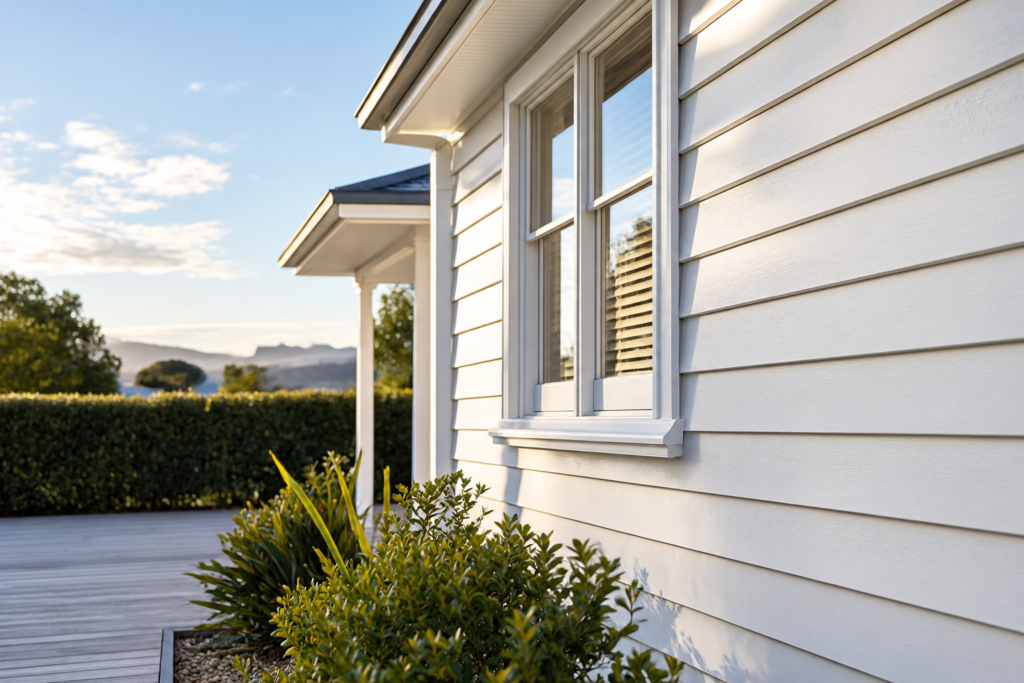
If you are already planning other exterior work, it can be a good time to look at the weatherboards too.
For example, a project might include:
- Weatherboard repairs
- Exterior painting
- New fencing
- Deck repairs or replacement
- Pergolas
- Window and door maintenance
- Gutter repairs
- Landscaping
Planning several improvements together can help create a more consistent result and avoid damaging newly completed areas later.
Need Help With Weatherboard Repairs in Hawke’s Bay?
Keeping weatherboards in good condition is an important part of maintaining your home.
Whether you have a few damaged boards, peeling paint, tired exterior trims or a larger area that needs attention, dealing with problems early can help protect the property and keep it looking its best.
At Total Property, we help homeowners across Hawke’s Bay with weatherboard repairs, exterior maintenance and a wide range of practical property improvements.
If your weatherboards need attention, get in touch with the Total Property team to discuss what needs to be repaired and the best way to approach it.